
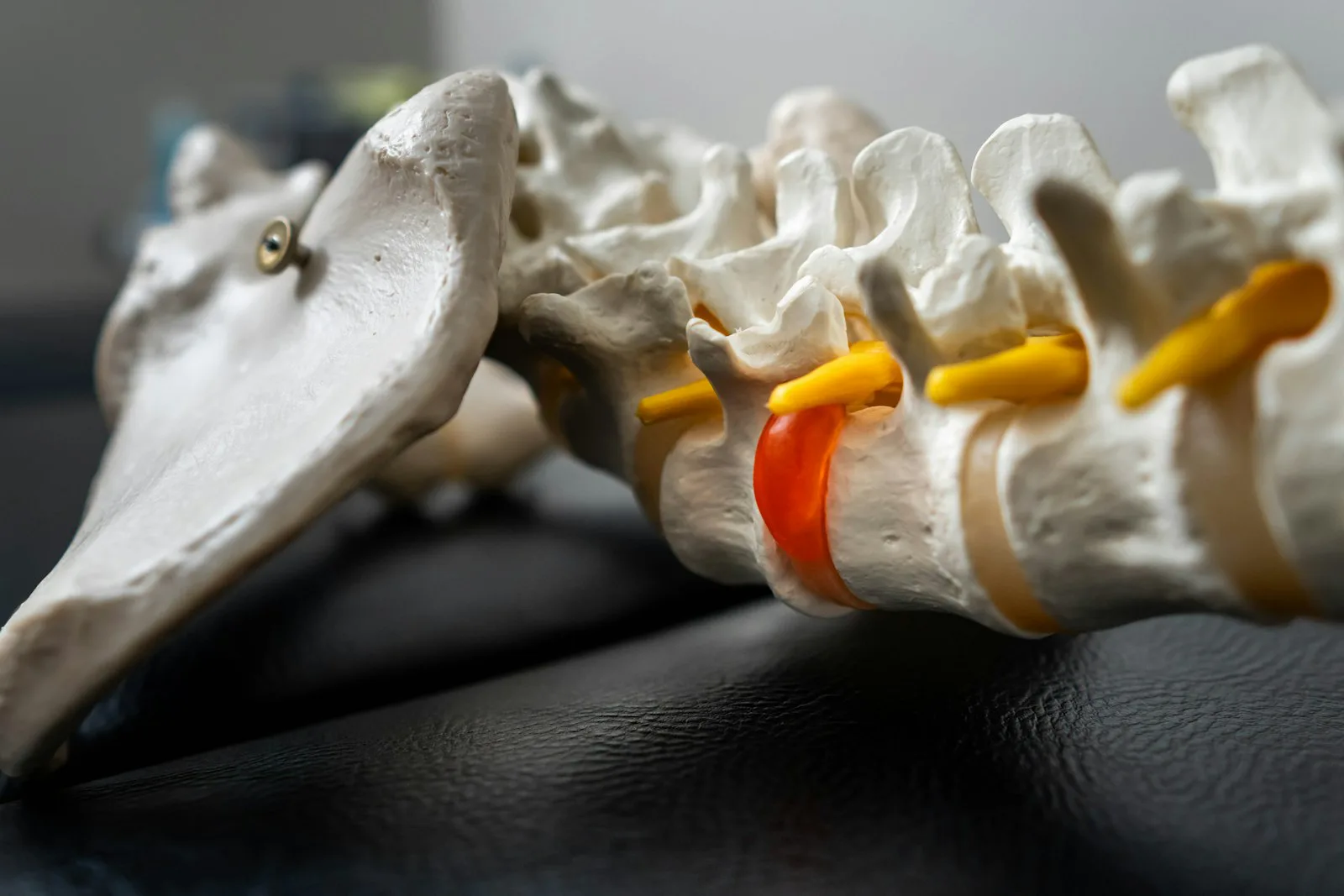
A herniated disc, also called a bulging or slipped disc, happens when the soft center of a spinal disc pushes out through a crack in its outer layer. It is most common in the lower back, and it also happens in the neck. Quantum treats it without surgery, with physical therapy and chiropractic care in the same location.
Herniated disc symptoms
They depend on where the disc is and whether it presses on a nerve, and they usually affect one side of the body:
- In the lower back: pain in the back, buttock, thigh and calf, sometimes down to the foot
- In the neck: pain in the shoulder and arm, sharp or burning, worse when you cough, sneeze or move a certain way
- Numbness or tingling along the nerve’s path
- Weakness: dropping things, trouble lifting or feeling unsteady on your feet
Some herniated discs cause no symptoms at all and only show up on imaging.
Signs that need emergency care
Get emergency care if pain, numbness or weakness keeps getting worse and makes everyday activities hard, if you have trouble holding or passing urine or stool, or if you lose feeling in the inner thighs, the backs of the legs or around the rectum.
What your evaluation includes
Your provider checks how you move your back or neck, tests strength, reflexes and feeling in your arms or legs, and looks for movements that send the pain down a limb. If the results call for an MRI, you are referred for one; if you already have one, bring the report.
How a herniated disc is treated here
Physical therapy works on movement, posture and the core and back muscles that support the disc, and chiropractic care treats the spine with techniques chosen for a disc injury. Read whether to see a chiropractor for a herniated disc.
When the disc presses on a nerve, the pain can run down a leg, which is sciatica, or down an arm, a pinched nerve in the neck. Visiting specialists offer nerve testing (EMG/NCS) to see how the nerve is working, and pain management when pain persists.
Paying for herniated disc treatment
A disc injured in a car accident is usually covered by No-Fault, and one injured on the job by workers’ compensation. Otherwise, we accept health insurance depending on your case, and offer self-pay.