
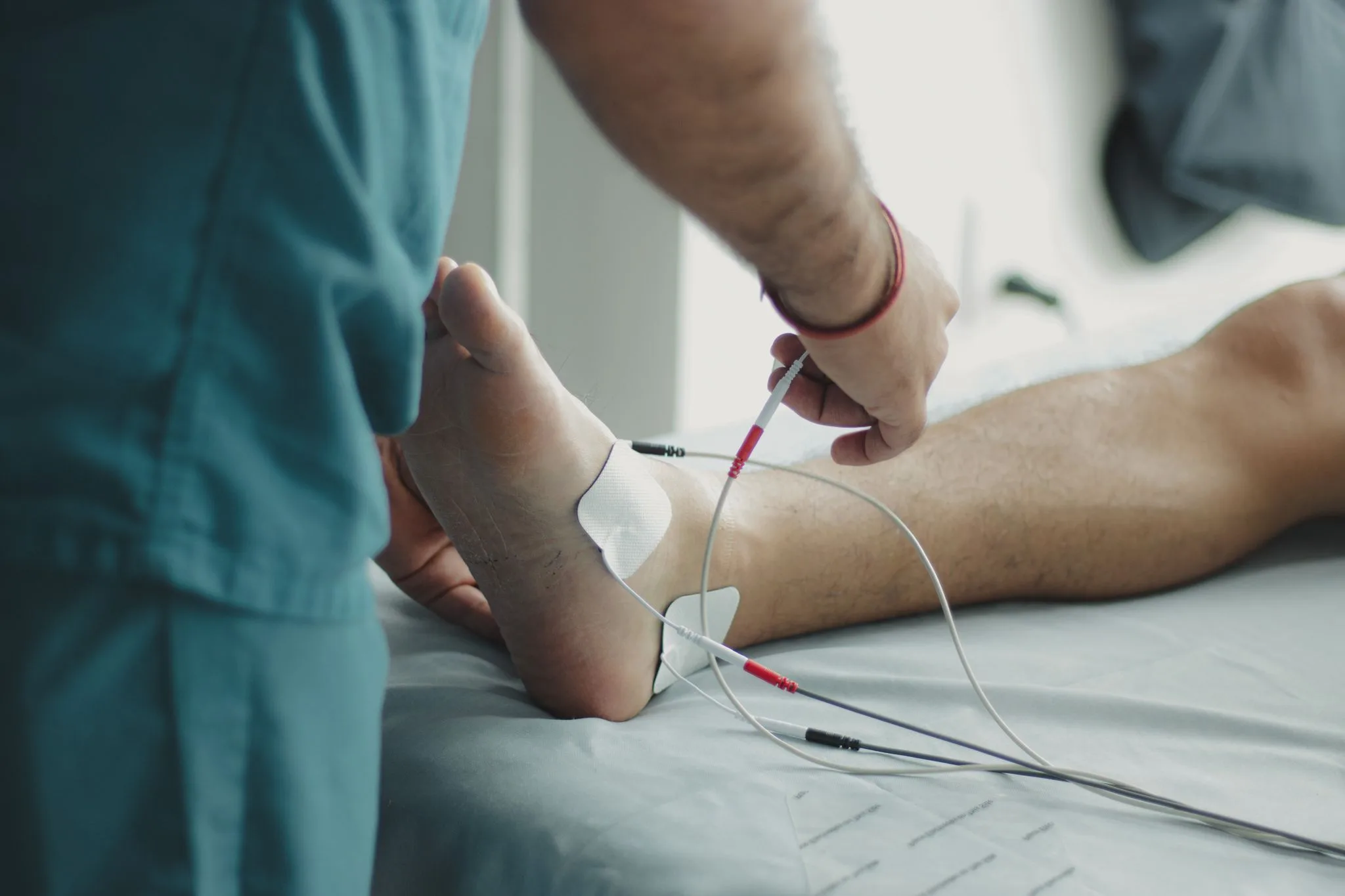
Electrodiagnostic testing measures how well your nerves and muscles work. It has two parts, nerve conduction studies (NCS) and electromyography (EMG), and together they show whether a nerve is pinched or damaged, and where. At Quantum, it is available through the specialists who visit our locations.
Why your provider may order EMG/NCS
- Numbness, tingling or weakness in an arm, hand, leg or foot
- Carpal tunnel symptoms in the hand
- A pinched nerve in the neck, or sciatica from a herniated disc in the lower back
- Nerve symptoms after a car accident or a work injury
What happens during the test
Nerve conduction study: small electrodes taped to your skin send brief, mild electrical pulses along a nerve and measure how fast and how strongly the signal travels. You may feel each pulse as a quick twinge.
EMG: a thin needle electrode placed in a few muscles records their electrical activity, at rest and while you tighten them slightly. It can be uncomfortable, and the discomfort usually ends when the needle comes out. A small bruise may follow and fades within days.
How to prepare
- Shower before the test, and don’t put lotion or cream on your skin.
- Tell us if you have a pacemaker or another electrical medical device, take blood thinners or have hemophilia.
- Ask whether to pause any of your medicines before the test.
After the test
The results go to your treating provider and shape your plan: physical therapy or chiropractic care aimed at the right spot, or a referral to pain management. Ask the location how the test is billed for your case. Read about pinched nerves after a car accident.